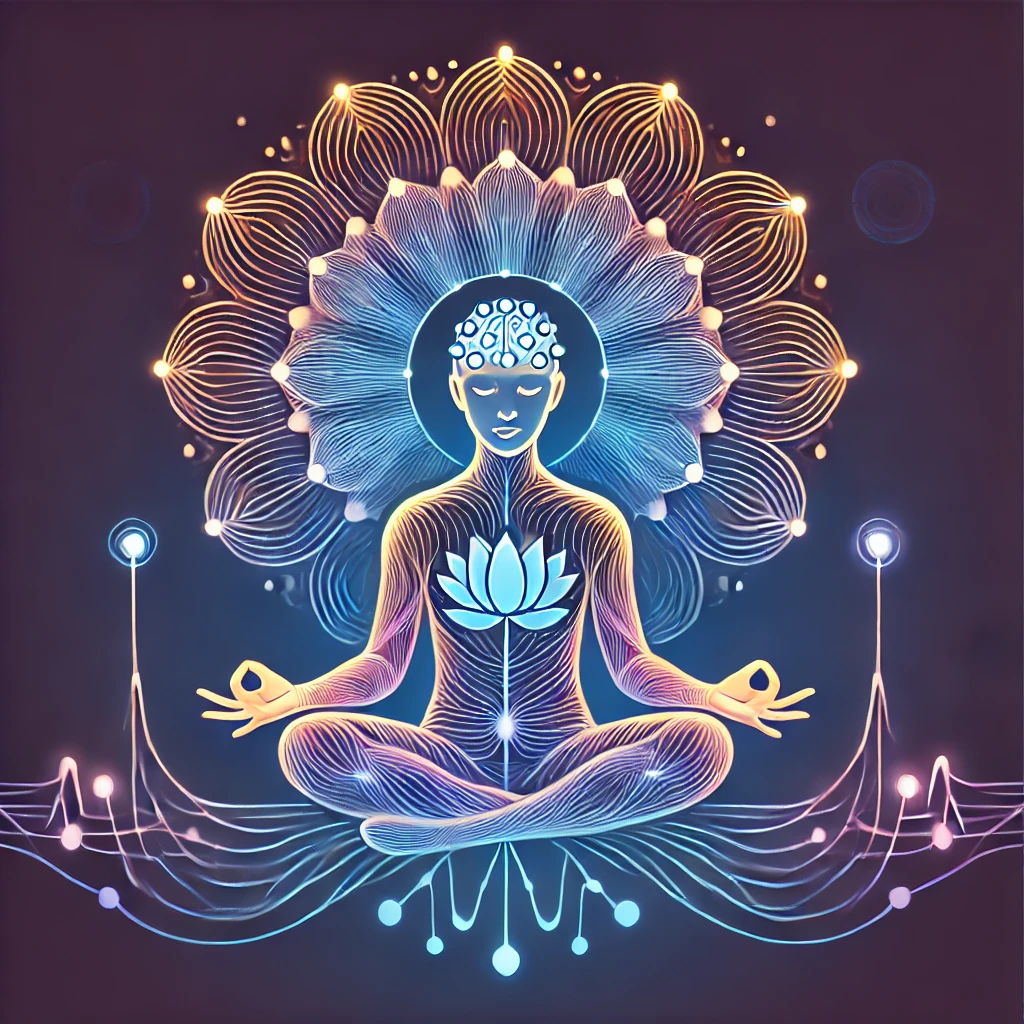

Embodied Pathways to Spiritual Meaning, Resilience, and Flourishing
A mixed-methods research program testing whether embodied practices — ecstatic dance, yoga nidra, breathwork, drumming, community song, and meditation — satisfy spiritual yearning, strengthen social connection, and reduce diseases of despair (depression, addiction, loneliness). We combine ethnography, global surveys, randomized trials, wearable biomarkers, and multimedia storytelling to produce datasets, predictive models, and public-facing resources for clinicians, facilitators, and the public.
TL;DR
We will (1) map who uses embodiment practices and why; (2) test psychological & physiological benefits in RCTs and longitudinal studies; (3) benchmark outcomes against psychedelic-assisted therapy measures; (4) publish open datasets, create predictive matching tools, and produce multimedia outputs to expand access to evidence-based, non-pharmacological paths to meaning and resilience.
Problem & Rationale
Rising rates of depression, loneliness, and substance misuse have created urgent public-health challenges. Many people who are spiritually inclined avoid traditional religious institutions and pharmacological interventions; they increasingly seek embodied practices (movement, breathwork, group sound) for meaning and healing. Despite strong practitioner claims and growing interest, rigorous comparative data on the psychological, physiological, and social effects of these practices are limited.
Our work fills this gap by combining culturally informed fieldwork with preregistered experiments, biomarkers, and open science practices.
Approach
We use four interrelated approaches across multiple sites:
- Ethnography: Fieldwork in cultural hubs (San Francisco, Lake Atitlán, Bali, Hawaii, European collectives) documenting lived practices and meaning-making frameworks.
- Global Surveys: Preregistered, multi-cohort surveys measuring practice engagement, mystical/flow experiences, mental health, and individual differences.
- Randomized Controlled Trials & Longitudinal Studies: Multi-site RCTs and repeated-measures designs comparing movement-based practices (ecstatic dance, contact improv), meditation (app-based and ambient-music-guided), yoga nidra, and active controls.
- Biomarkers & Wearables: Wearable HRV (RMSSD), resting HR, sleep, accelerometry; subset EEG and salivary cortisol assays to probe mechanisms.
- Public Engagement: Short films, web-based practice-matching tools, facilitator toolkits, and open datasets.
Principal Projects
Project 1 — Global Surveys of Embodiment Practices: Multi-cohort, international surveys to benchmark embodied practices vs. psychedelic-assisted therapy metrics and to model who benefits from which practices.
Project 2 — The Dancing Spirit (Ecstatic Dance): Ethnography, surveys, and RCTs (ASU, University of Cologne, Guatemala) testing solo ecstatic dance and contact improvisation against matched exercise and partner-control conditions; HRV and EEG in subsamples.
Project 3 — Daily Meditation (Waking Up app): Randomized app-based meditation trial with EMA, wearable biometrics, and psychological outcomes.
Project 4 — Yoga Nidra: Ethnographic and experimental studies of Nidra practice (collective vs solo), aligned measures for cross-practice comparison.
Project 5 — Meditation to Ambient Music: Minimal, scalable intervention to test effects of still, music-guided practice relative to movement-based practices.
Methods & Measures
All studies follow open-science conventions (preregistration, shared code, DOI-linked datasets). Psychophysiological measurement adheres to best-practice standards: raw interbeat interval (IBI) access where possible, artifact correction, standardized epoch lengths (≥5 min), respiratory covariates, and device metadata. Key instruments:
- Psychological: Mystical Experience Scales, depression and loneliness inventories, substance use screens, gratitude & loving-kindness scales, individual-difference batteries.
- Physiological: HRV (RMSSD primary), SDNN, HF/LF, Poincaré metrics; resting HR; sleep staging; EEG (frontal alpha asymmetry) and salivary cortisol for subsets.
- Data quality & governance: secure storage, pseudonymization, GDPR/HIPAA compliance for international transfers (SCCs / Data Privacy Framework where applicable).
Planned Outputs
- Open, preregistered datasets with DOI and associated analysis code.
- Multiple peer-reviewed publications across psychology, neuroscience, anthropology, and digital health.
- Biomarker evidence synthesizing HRV, EEG, and cortisol effects.
- Practice-matching web tool and facilitator best-practice guides.
- Short documentary films and public storytelling assets.
Outcomes & Broader Impacts (5-year horizon)
- Validated evidence that embodied practices can reduce markers of despair and enhance meaning-making and connection.
- Practical tools for clinicians and community leaders to match people with effective, non-pharmacological practices.
- Open datasets and reproducible pipelines that fuel further research and cross-disciplinary integration.
- Public engagement through films and toolkits to expand access and cultural exchange.
Project Leadership & Partners
PI: D. Vaughn Becker, PhD — Arizona State University
Key collaborators: John J.B. Allen (University of Arizona), K.J. Patten (ASU), Vrije Universiteit Amsterdam, University of Cologne, practitioner networks, and cultural advisors.
We welcome collaborations with academic partners, device manufacturers, cultural organizations, and funders.
Get involved
If you are a potential participant, facilitator, funder, or research partner, please contact the PI to discuss collaboration, participation, or data access.